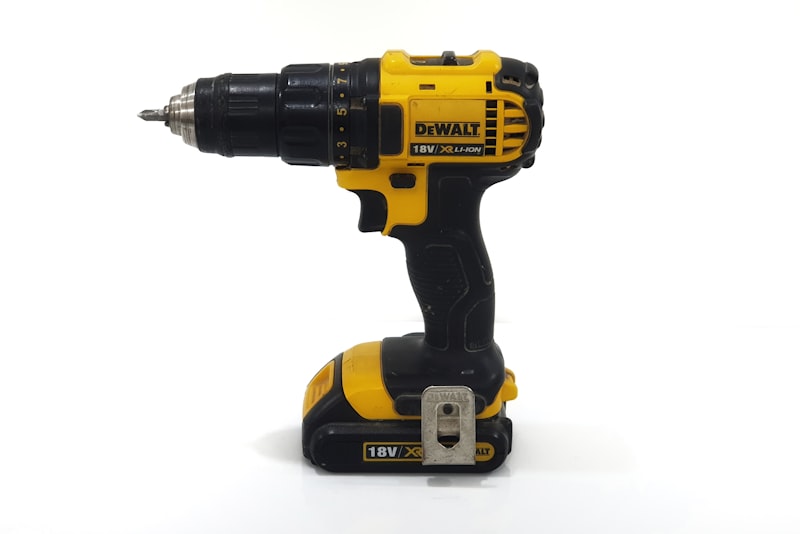
A cordless drill is the first power tool most people buy, and it's the one you'll reach for on nearly every project for the rest of your life. That makes it worth getting right the first time, because the choice you make is less about a single tool and more about the battery ecosystem you're quietly signing up for. I've bought, borrowed, and worn out enough of these to have opinions, so let me walk you through what actually matters once the marketing sticker comes off.
Here's the counterintuitive part: the drill itself is almost the least important decision you'll make. What you're really choosing is a battery platform — the family of tools that share one type of interchangeable battery pack. Once you own three or four batteries and a couple of chargers for a given brand, switching becomes genuinely painful and expensive. You end up locked in, and that's fine as long as you locked into something good.
So before you fall in love with a specific drill, ask what else that brand makes:
- Do they offer an impact driver, circular saw, jigsaw, and sander on the same battery?
- Are bare tools (no battery included) easy to find? This is how you save money later.
- Have they been on the same battery standard for several years, or do they reinvent the mount every couple of generations?
The big names in the trade space — DeWalt, Milwaukee, Makita, Bosch, and Ryobi on the budget end — have all kept stable platforms with wide tool selection. Any of them is a defensible choice. The mistake is buying a great-reviewed drill from a brand that makes nothing else you'd ever want.
Once you own batteries, buy tools bare — the tool alone, no battery or charger. A bare impact driver often costs a fraction of the kit price because you're not paying for cells you already have. This single habit is why platform loyalty pays off, and it's the strongest argument for not spreading yourself across three brands.
Brushless or brushed: pay the difference#
Motors come in two flavors, and this is one spec where the upgrade is genuinely worth it.
- Brushed motors are the older design. They use physical carbon brushes that make contact to spin the motor. They work fine, cost less, and wear out faster because those brushes literally grind down over time.
- Brushless motors use electronics instead of physical contact. They run cooler, waste less energy as heat and friction, and adapt their power draw to the task.
In real use, the brushless advantage shows up three ways: noticeably longer runtime per charge, more torque from a smaller and lighter body, and a longer service life because there's simply less to wear out. If your budget stretches to a brushless drill, take it. It's the difference you'll feel every single session, not a spec-sheet bragging point.
The one honest caveat: for someone who drills a few holes a month and hangs the occasional shelf, a good brushed drill will outlive their interest in the hobby. Don't let anyone shame you out of a solid brushed tool if that's your reality.
Understand voltage without overbuying#
Voltage roughly correlates with power, and the marketing pressure is always to buy more. Resist it a little.
- 12V drills are compact, light, and shockingly capable for their size. For furniture assembly, cabinet work, and general around-the-house drilling and driving, a modern 12V brushless drill is a joy to hold all day.
- 18V/20V drills (they're the same thing — "20V max" is just the 18V nominal voltage measured at peak) are the workshop standard. This is the sweet spot for woodworking: enough power for large auger bits and hole saws, with a battery range that covers saws and other bigger tools.
- Higher-voltage systems exist mainly for demanding trades — think mixing mortar or boring through framing all day. For a home woodworking shop they add weight and cost you won't recoup.
My honest guidance: for woodworking, 18V is plenty. Chasing higher numbers buys you a heavier tool that fatigues your wrist during detail work. If you already know you want ultra-compact, a 12V is a legitimate primary drill, not a toy.
What the amp-hour number means#
The Ah rating on a battery (2.0Ah, 4.0Ah, 5.0Ah) is capacity, not power — think of it as tank size. A bigger number means longer runtime and, usually, a bigger and heavier pack. A sensible starting kit for most people is a mix: a small 2.0Ah pack for light, all-day handling and a larger 4.0Ah or 5.0Ah pack for extended sessions or hungrier tools like saws.
The drill and the impact driver do different jobs#
This is the single most useful thing I can tell a beginner, and it surprises almost everyone: a drill and an impact driver are not the same tool, and you eventually want both.
- A drill/driver has a keyless chuck that grips round and hex bits, an adjustable clutch, and smooth rotational force. It's for drilling holes and for driving where precision matters.
- An impact driver has a quick-release hex collet and delivers rapid rotational hammer blows when it meets resistance. That mechanism drives long screws and lag bolts with almost no effort and without stripping heads or twisting your wrist.
If you've ever fought to sink a 3-inch deck screw with a drill — the bit camming out, the drill trying to spin you instead of the screw — an impact driver feels like cheating. A separate impact driver drives screws far better than a drill. Many brands sell the two together as a combo kit that shares batteries and charger, and that pairing is the best value in the whole category. If you can only start with one tool, buy the drill; but plan on the impact driver being your next purchase, not a maybe.
The specs that actually matter on the shelf#
When you're comparing models, most of the numbers are noise. Here are the ones I actually check:
- Chuck size. A 1/2-inch keyless chuck is what you want for a workshop drill; it accepts larger bits than a 3/8-inch chuck and is now standard on most 18V tools. Smaller 12V drills often use 3/8-inch, which is fine for their intended lighter duty.
- Clutch settings. The numbered collar behind the chuck sets a torque limit so screws stop at a consistent depth instead of stripping or sinking too far. More settings give finer control; the presence of a dedicated drill mode (usually a drill-bit icon past the numbers) that disengages the clutch matters more than the exact count.
- Two-speed gearbox. A switch on top for low speed/high torque and high speed/low torque. Low for driving and big bits, high for small drilling. This is close to essential — single-speed drills feel compromised.
- Grip and weight. Hold it if you can. Where the battery sits changes the balance completely, and a drill that feels fine in the aisle can wear on you over an afternoon of overhead work.
- An LED worklight and a belt hook sound trivial until you're crouched inside a cabinet and appreciate both. Minor, but free wins.
Things I largely ignore: peak torque figures (measured inconsistently between brands), and bundled bit sets, which are usually mediocre. Buy a decent standalone bit set separately.
Be honest about your projects before you spend, because the right drill for a deck builder is the wrong drill for someone making small boxes.
- Occasional home DIY and flat-pack furniture: a compact 12V brushless drill/driver covers nearly everything and never feels like a burden.
- General woodworking and shop projects: an 18V brushless combo kit (drill plus impact driver, two batteries, charger) is the do-everything answer and the one I recommend most often.
- Heavier building — decks, fencing, framing: stay 18V but prioritize the impact driver and a couple of larger 4.0Ah+ batteries so you're not swapping packs constantly.
Notice that voltage barely moves across those tiers. What changes is the tool pairing and battery capacity — which is exactly why the platform decision at the top matters more than any single spec.
You don't need the flagship. The mid-tier brushless kit from any major brand is where the value lives; the premium models add features that mostly serve full-time tradespeople. And the used market is genuinely good here — bare tools from reputable brands are durable, and a lightly used drill from a platform you're committed to is a smart buy. The one thing I'd be cautious about secondhand is batteries, since their health is hard to judge and they degrade with age and charge cycles. Buy tools used if you like; buy batteries new.
Bringing it together#
Choose the ecosystem first, then the drill. Spend up for brushless if you can, settle happily on 18V for a woodworking shop, and budget for a separate impact driver as your near-term second tool rather than treating it as optional. Get those four decisions right and the specific model almost doesn't matter — you'll have a foundation that grows with your skills instead of one you outgrow in a year. Buy once, buy sensibly, and go make some sawdust.